
BOYCOTTING
How do I even...


Through the course of the Palestinian Genocide, basically since October 7th 2023, this music video that I made in 2004 has crossed my mind more times than I can figure. I have shared it before, but want to share it again here in the context of what I’m writing today. It’s a sort of cola-wars-meets-global-conflict-ironic-yet-not-really-ironic-at-all video work that expressed my feelings during the Iraq War about global consumerism, multinationals, and empire.
Today I'm thinking about this video in terms of boycotting companies that support Israel. I feel that the BDS movement (you probably already know what this is, but if not, I encourage you to look it up!) is important and that it might be the simplest way that hundreds of thousands of citizens can make an impact in the fight for Palestinian independence. However, I personally have found it very hard to do in a way that SEEMS meaningful.
I fall prey to grand gestures. I think that maybe a lot of us do. We think “nobody will even see what I'm doing and nobody will even know what it means, so why do it?”. It’s difficult and, yes, expensive to boycott in a way where people notice that you are doing it, and so it is easy to feel that your drop in the bucket won't count enough because we think “if it's just me, alone, doing this then it won't matter. I have to convince others to do the same, but I won't be taken seriously If they once saw me drinking a Coke”.
The fact is, a lot of my clothing, and a lot of the things that are purchased in my household are made by “evil corporations”, and I can't really afford to replace the products I already own.
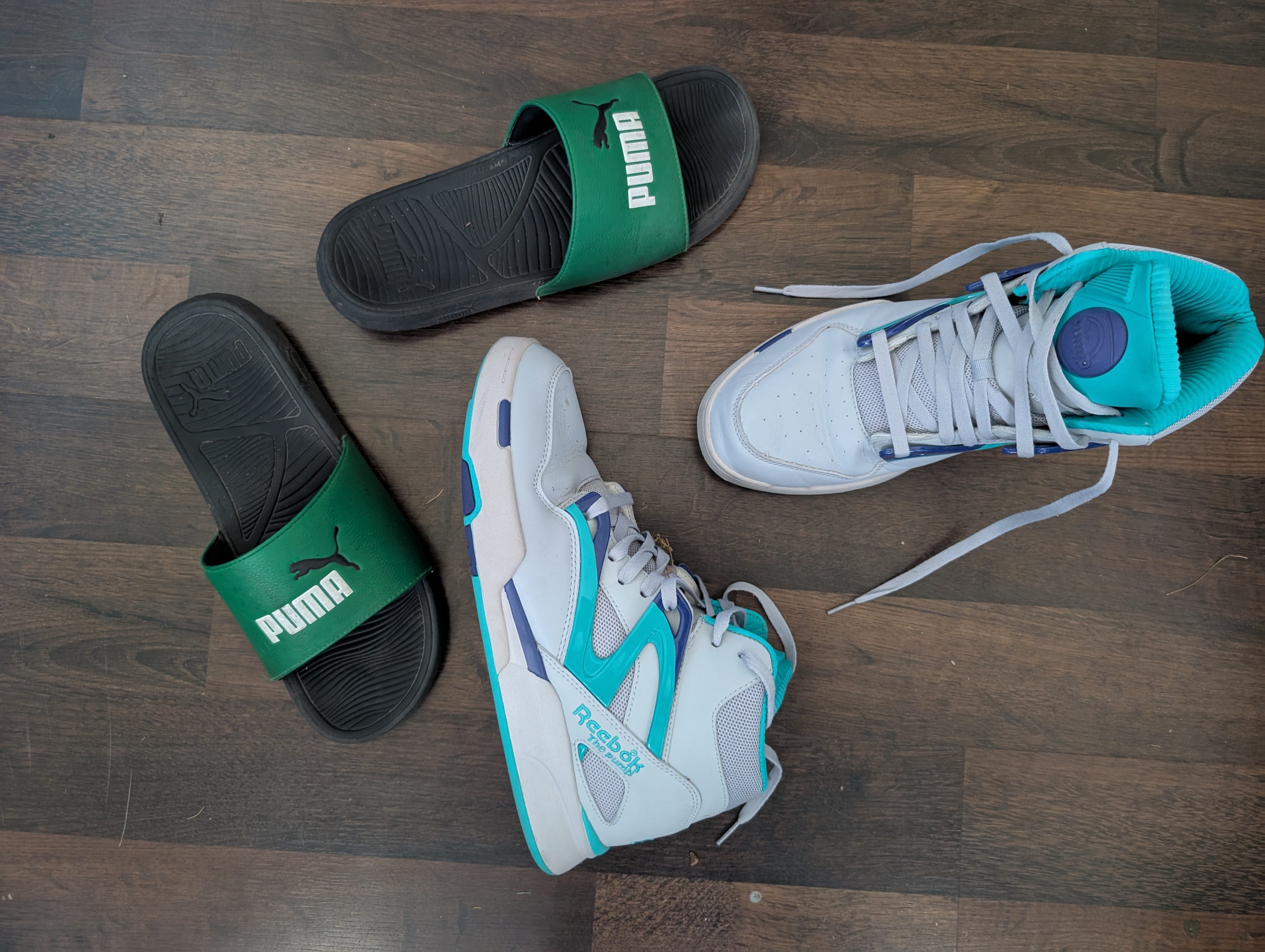
Here is the floor in front of my front door. A couple years back, I bought these Reebok Pumps in a fit of nostalgia. While I don't own a lot of clothing with brands stamped on the clothing, I own enough that it would be hard to replace it all. It's the same problem with other objects. Am I going to replace my flat screen TV with one that's made by a different electronics company that uses fewer sweatshops? I just can't afford that. Of course, I know that that doesn't make a lot of sense objectively (because anyone can just start controlling their purchases going forward and not look back), but it seems a little difficult when (for example) you are wearing things and people see the brands. Puma no longer supports the Israeli football team, so does that mean that I can wear my Puma slides even though they are still reported to have sweatshop conditions at places within their supply chain? These questions get even more complicated when you think about all of the different issues you care about. Does it make sense to only support BDS and not other reasons for boycotting? When somebody in my family orders Christmas presents from Amazon, do I chastize them? When one of my kids gives me a tie for Father's Day that was made in a sweatshop, do I choose not to wear it? When somebody brings me lunch from McDonald's while I'm at work, do I not eat it? If I support BDS, then I should support other human rights issues, and I should probably reject just about every multinational company because the majority of them put profit over people, time and time again. It's built into their DNA. I believe that this is the reason most people don't boycott anything at all. It just becomes too complicated when somebody thinks about it for too long.
But…
…this morning I woke up an hour later than I'd meant to. I had to hurry to work but didn't feel my usual need for immediate sugar and caffeine before leaving… so I had a bagel and a glass of water. I thought that maybe I could go to sleep a little earlier tonight and produce the same results tomorrow, skipping the vicious cycle of caffeine and sugar cravings for a while. If I'm successful tomorrow, I'll probably fail the next day, so what's the point right? Well, If I keep trying, I'll eventually build better eating habits and better sleep habits, right?
I spent the morning today thinking about how the same is true for avoiding toxic brands. You'll fail all the time, but eventually you'll build the habit, and eventually, when your shoes get worn, and your TV dies, and your craving for McDonald's subsides, you'll have better purchasing habits.
…But then I thought…
“It will still be ‘just me' doing this. It won't make a dent”.
And then…
“But I'll personally FEEL better.”
And that's when the epiphany hit.
It's this:
When you feel better about your purchases, the habit reinforces itself, and eventually becomes a part of you. It's your identity that you don't buy those things. If your relationships with non-boycotters are important to you, then navigating your interactions with others in this area can also become your identity. You'll know when to say something that might influence someone and you'll know when to let things go. You'll know that sometimes you just eat the burger or wear the gift, but other times you suggest a friend buys lunch from a local restaurant, or avoids a certain company all together.
All habits are a daily meditation on our values. In that meditation, you may eventually turn your life into the grand gesture you desire, or you may not. Either way, you inhabit the world in a way that you aren't ashamed of, but you can still remain rooted in reality.
Today, I've committed to avoiding most multinational corporations when I can. I'll still wear my sneakers until they wear out (and then get something better), and I'll still buy the McDouble if I'm broke and there's no other quick/cheap option in a ten mile radius, but I will consciously make my purchases with a global mindset each day.
Amen.